
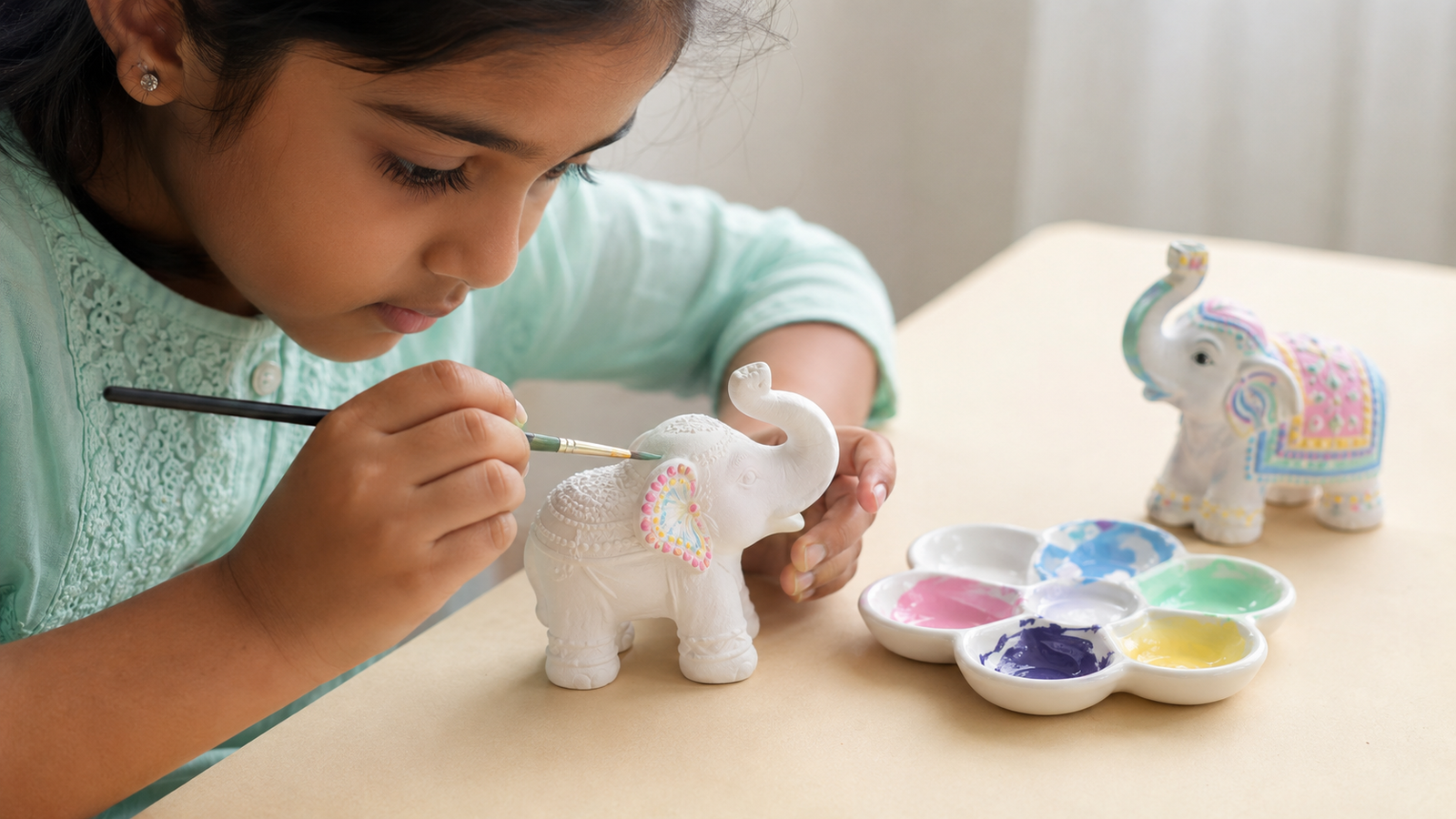
Painting a plaster figure may look like simple play, but the activity asks a child to make many small decisions: which colour to use, where to begin, how much paint belongs on the brush and what to do when the first idea changes.
Painting activities for kids can create useful opportunities to practise hand control, patience, imagination and self-expression. These are everyday learning experiences—not a test, therapy or competition—and every child approaches them differently.
What children can practise while painting plaster figures
1. Hand and brush control
Holding a brush, moving it across a curved surface and reaching smaller areas all require controlled hand movements. Younger children may use broad strokes, while older children often begin experimenting with outlines, dots and patterns.
The goal is not perfect precision. Regular opportunities to use brushes, crayons, pencils and other tools help children become more comfortable with different movements.
2. Colour choices
An unpainted white figure gives the child a blank starting point. They decide whether an elephant must be grey, a rocket must be silver or a donut can be blue. These choices encourage independent thinking and show children that creative work can have more than one answer.
3. Planning and sequencing
Children naturally begin making a plan: paint the largest area first, save one colour for the details, turn the figure carefully and wait before touching a wet section. The plan may change, but the process introduces simple sequencing through play.
4. Patience
Paint does not always cover a surface in one stroke, and wet sections need time before the figure can be handled freely. Children practise continuing after a small mistake, pausing when necessary and returning to add details.
5. Focus on one physical task
A clear table, a figure and a few colours create a defined activity. Some children stay for a short time; others become absorbed for longer. Rather than forcing a fixed duration, adults can support focus by removing unnecessary distractions and keeping instructions simple.
6. Imagination and storytelling
The finished figure can become more than a decoration. A painted astronaut can begin a space mission, a vehicle can travel through a cardboard town and an animal can become the main character in a story.
Theme-based kits make it easy to continue the play. A space painting kit, for example, can lead into stories about planets, rockets and exploration.
7. Confidence in personal choices
When adults avoid repainting or “fixing” the child’s work, the finished piece belongs fully to the young artist. Displaying it on a shelf or sharing it with family communicates that effort and ideas matter.
8. Conversation and connection
Painting together gives adults and children a natural reason to talk. Instead of asking only “What colour is that?”, try open prompts:
- What made you choose that colour?
- Which part was the most fun to paint?
- What name would you give this character?
- Where do you think it is going next?
These questions invite explanation without turning the activity into a lesson.
How painting changes across ages
Ages 3–5
Younger children often enjoy covering large areas, naming colours and exploring the brush. Choose simple shapes, keep the number of colours manageable and supervise closely.
Ages 6–8
Children may begin planning colour sections, adding faces or patterns and creating stories around the figure. They can also compare different ways of painting without needing everyone’s result to match.
Ages 9–12
Older children may enjoy gradients, detailed patterns, themed colour palettes and room-display projects. Personalized letters and sets with multiple figures can offer more room for planning.
How adults can support the activity
- Prepare the space: use a tray or mat and place materials within reach.
- Offer limited choices: two themes are easier to choose between than a large shelf of options.
- Demonstrate briefly: show how to use the brush, then let the child begin.
- Do not correct unusual colours: creative choices do not need to match real life.
- Comment on the process: notice effort, ideas and persistence rather than calling every result “perfect.”
- Make drying part of the plan: prepare a safe place where wet figures can remain untouched.
Painting alone or painting together?
Both can be valuable. An individual activity gives the child control over their own pace. A shared family session creates conversation and lets children see that adults also make unexpected colour choices and small mistakes.
For siblings or groups, give each child their own figure and basic materials. Shared examples should inspire possibilities, not become rules everyone must copy.
From activity to keepsake
Unlike paper that may be folded away, a painted plaster figure can sit on a shelf, become a magnet or keychain, or join a small home gallery. The visible result reminds the child of the choices and effort that created it.
Nooru’s Happy Palette offers screen-free DIY painting kits for children aged 3–12, including animals, vehicles, space, fruits, donuts, insects, honey bees and personalized name options.
Frequently asked questions
Do children need painting experience?
No. The activity can begin with simple broad strokes and a few colours. There is no single correct final design.
What should I say when a child makes a mistake?
Ask what they would like to do next. Many unexpected marks can become patterns, new colours or part of the figure’s story.
Should adults paint the difficult parts?
Offer help when requested, but avoid taking over. Holding the figure steady or opening a paint pot may be more useful than completing the detailed section for the child.
Can painting work for parties and classrooms?
Yes. Individual kits, a protected work surface and a clearly labelled drying area make the activity easier to manage for groups.
Explore painting activities for kids or ask about school and workshop packs in Islamabad and Rawalpindi.